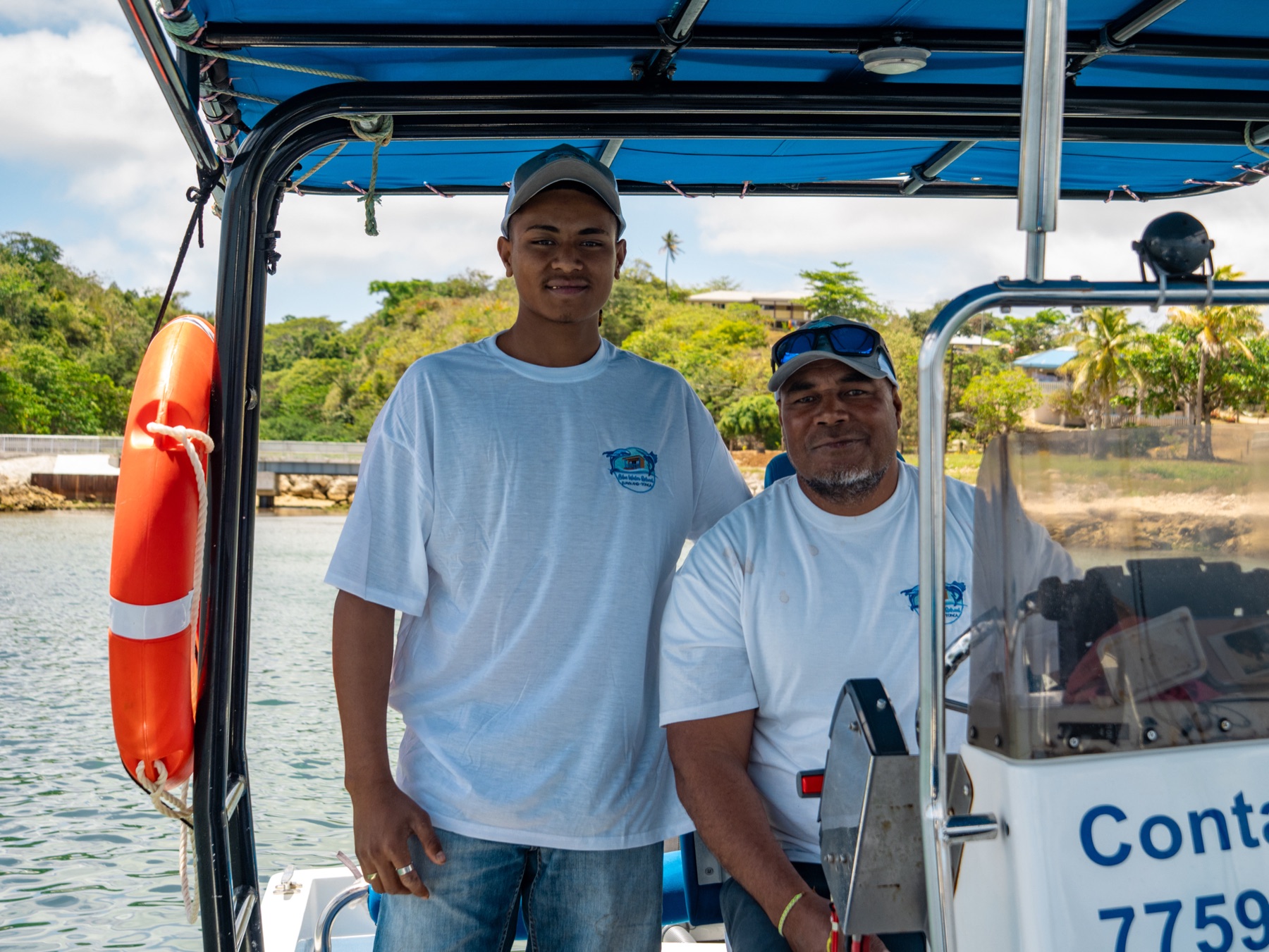
Vo and Ne · ʻEua
Father and son. Side by side on the water.
Vo and Ne are a father-and-son duo from ʻEua and part of the Blue Water crew. Two generations of the same island, working together on the same boat.
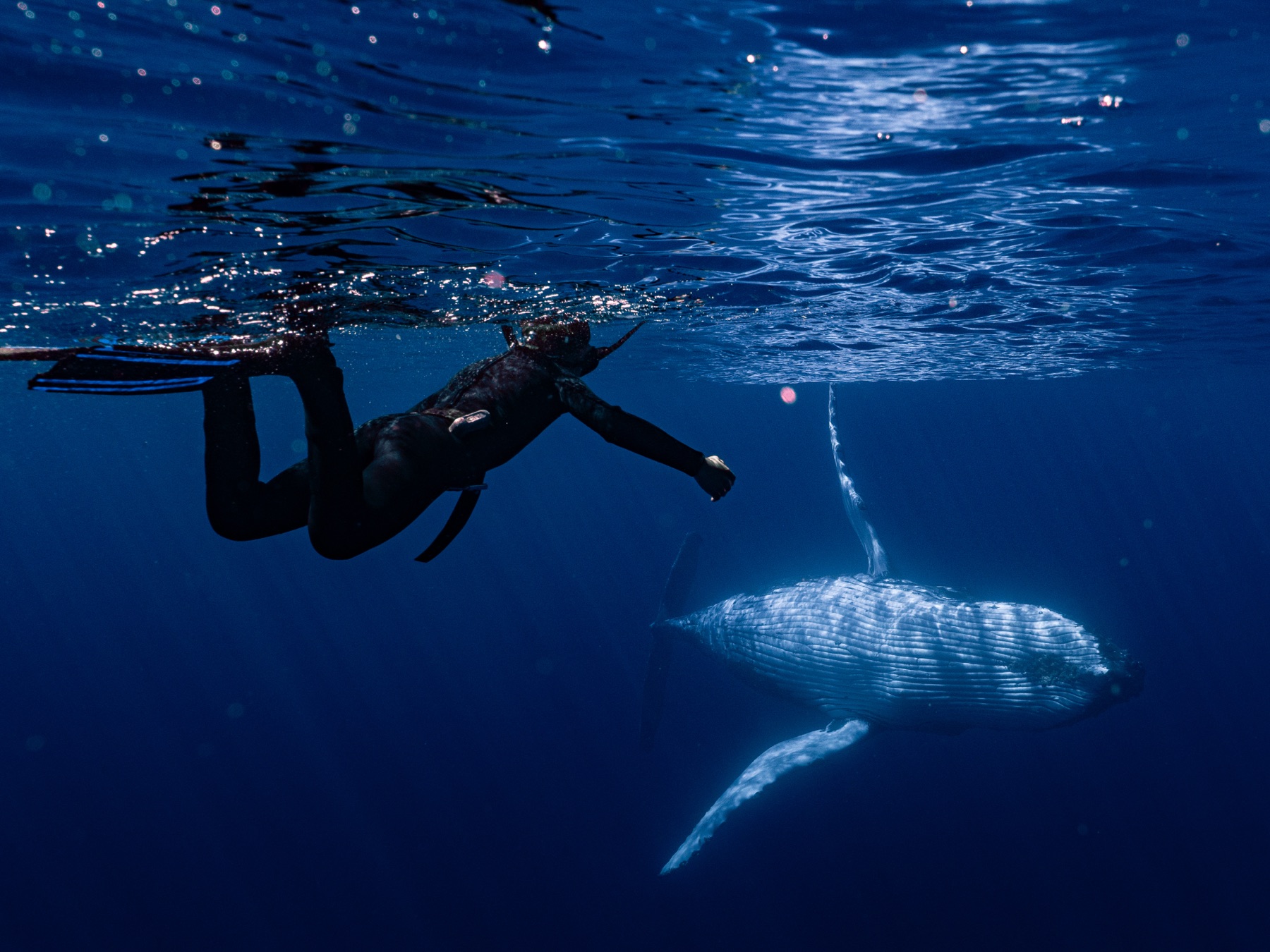
Whale swimming · Tonga
A winter return across the Pacific, and the privilege of meeting humpback whales in Tongan waters.
Whale swimming in Tonga
Humpbacks feed in Antarctic waters, then travel north to Tonga's warmer seas to mate, give birth and nurse their calves.
They arrive as part of an ancient cycle. What visitors meet here is not an attraction moving to a schedule, but a wild population living through one of the most important seasons of its year.
Research sources: International Whaling Commission, SPREP and Tonga's 2013 Regulations.
ʻEua and the passage
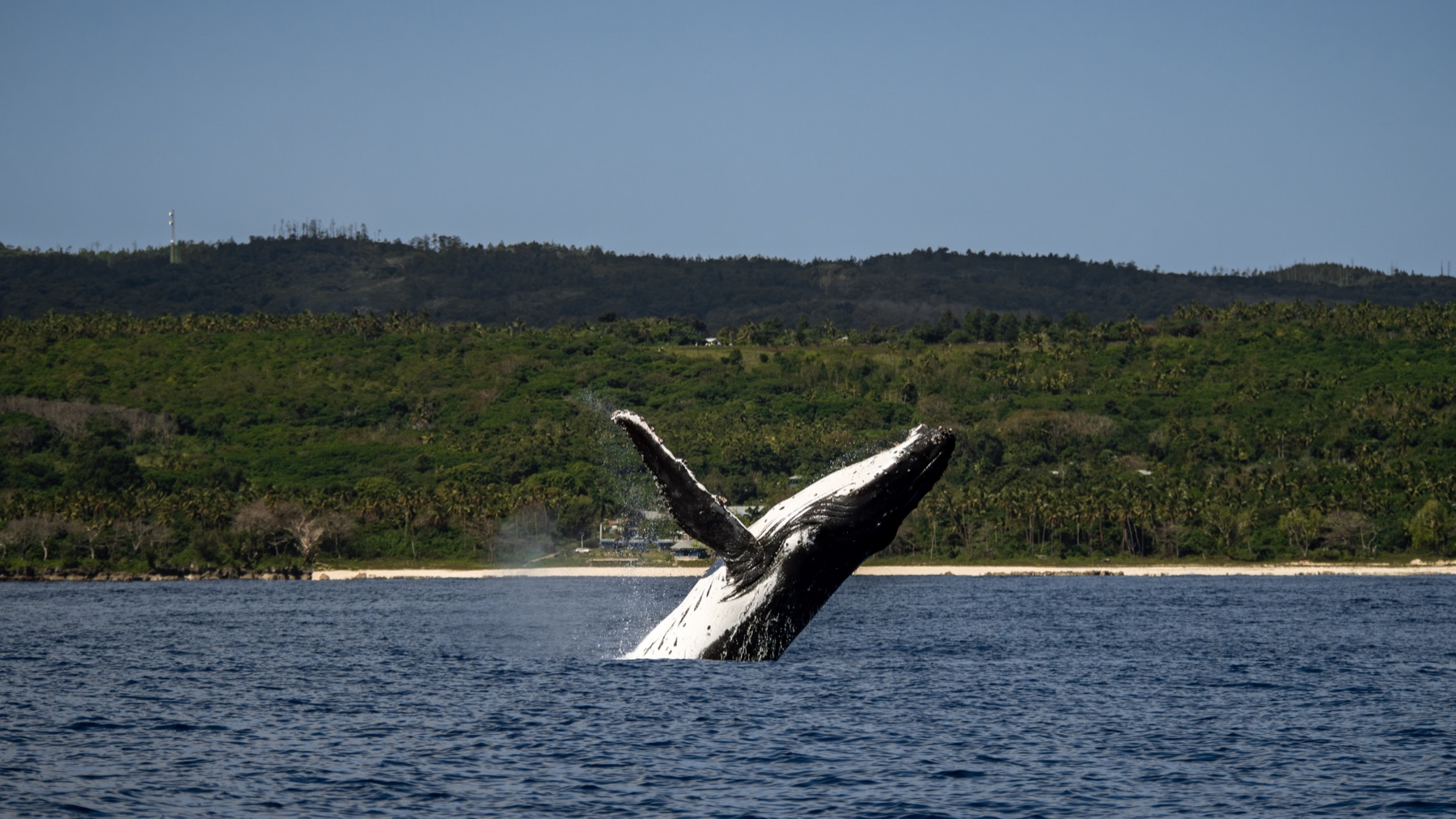
ʻEua sits at the southern edge of the Tongan archipelago, beside waters where humpbacks gather during the winter breeding season.
The highway is our name for that seasonal movement past the island. Some whales travel close to ʻEua's rocky coast. Others are found farther into the deep blue. Every day begins by reading the sea and looking for what has arrived.
ʻEua · Tonga
Each winter, humpbacks travel north from Antarctic feeding grounds to Tonga’s warm coastal waters to mate and give birth. Many whales seen around ʻEua move through the passage between ʻEua and Tongatapu. That seasonal movement past Blue Water is why we call it the Humpback Highway.
Watch first. Enter only when the moment is right.
On their terms
Tonga's regulations turn respect into practical choices. Our crew watches behaviour, sea conditions and the position of other boats before anyone enters the water.
Meet the crew
The crew prepares the boat, reads the sea and looks after the day from the first departure to the return home.
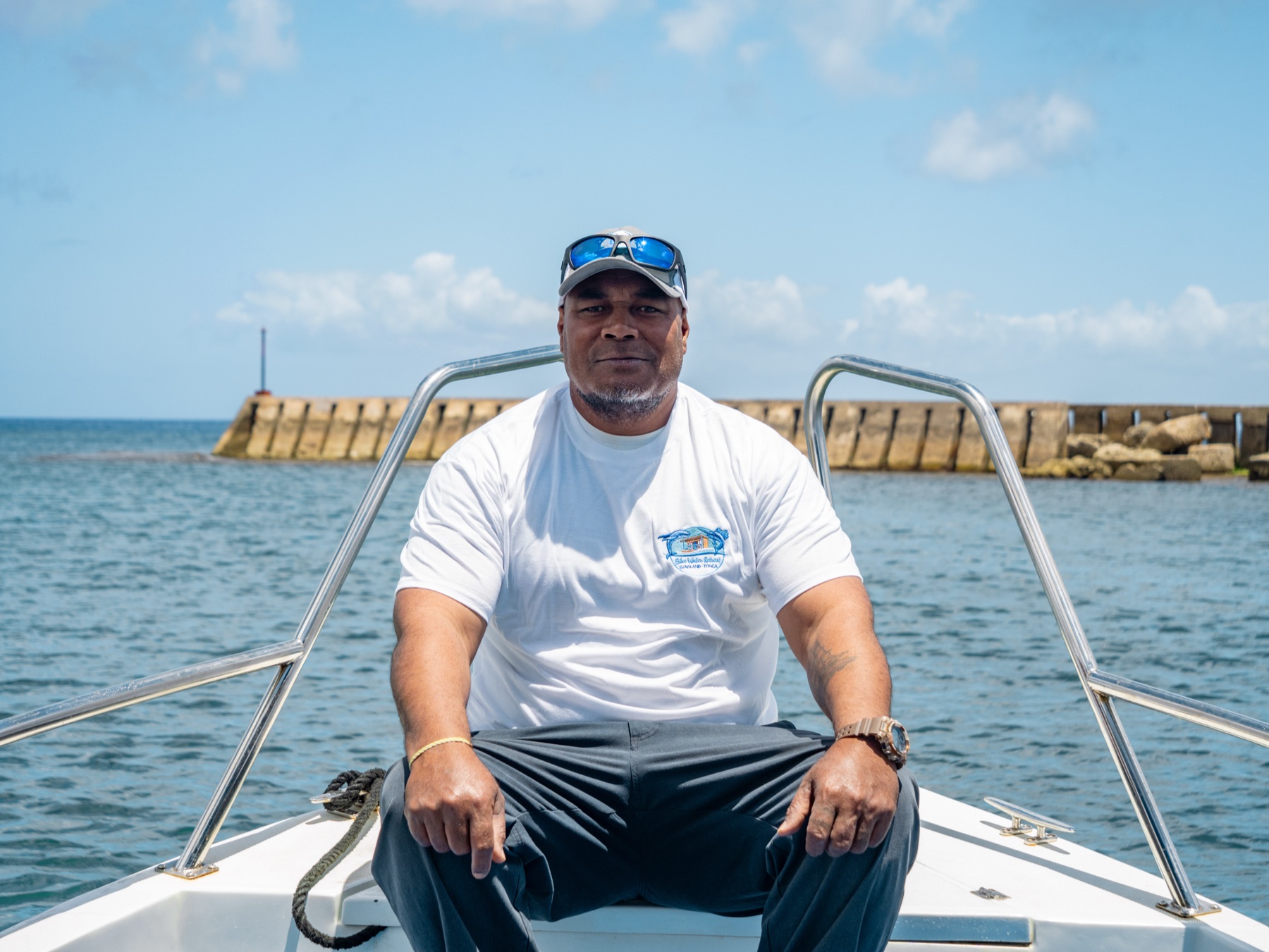
Vo has been working on the water since 2004, with experience across whale watching boats and the inter-island ferry. He joined the Blue Water Retreat crew in 2024, bringing two decades of maritime experience with him. Originally from Tongatapu, Vo has called ʻEua home for many years and knows these waters like the back of his hand.
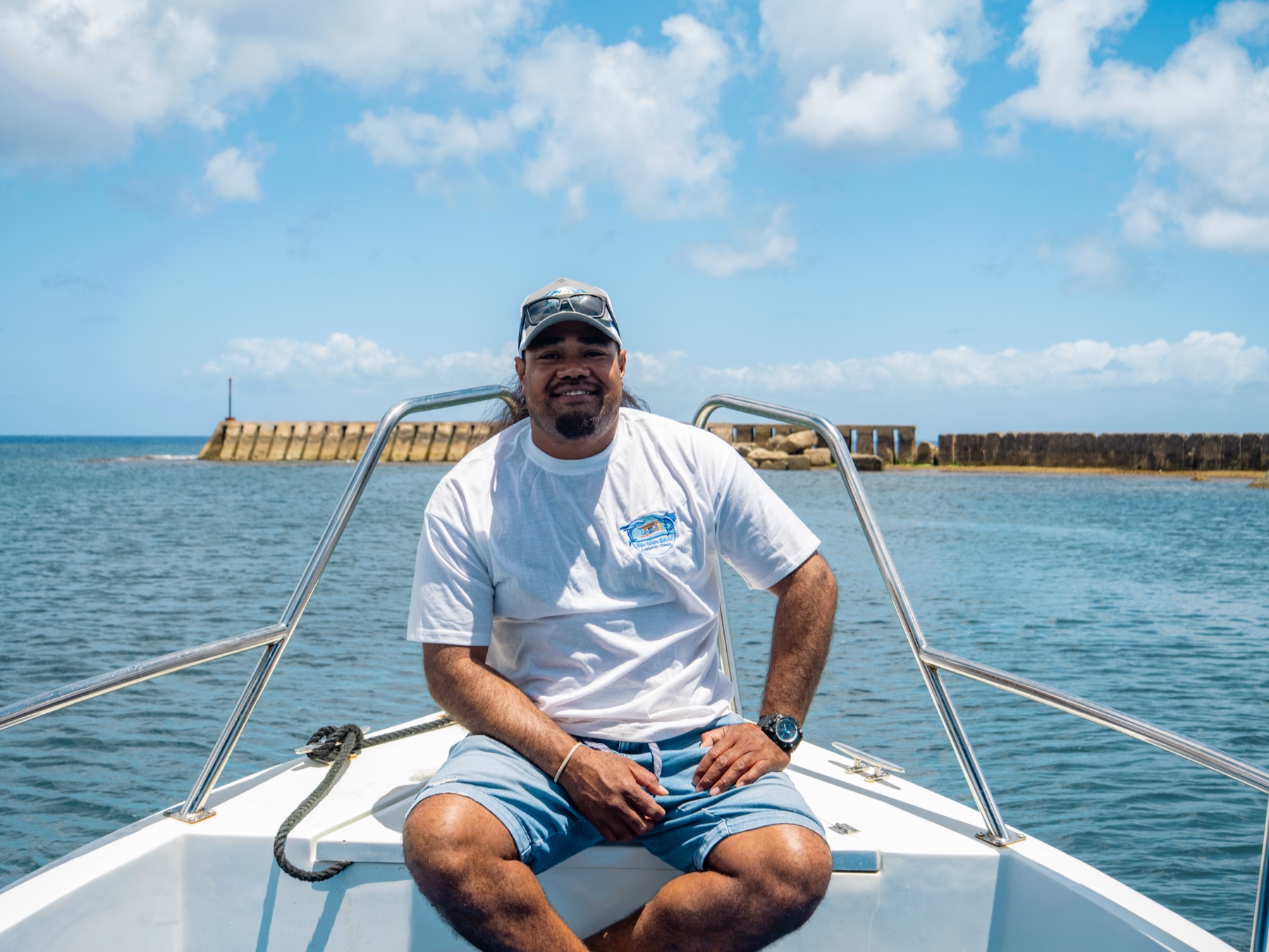
Sione has been part of the Blue Water Retreat family for 13 years. Starting out as a spearo, he moved into whale guiding before taking the helm as one of our most experienced skippers. Originally from Tongatapu, he makes the move to ʻEua each whale season, bringing years of knowledge and experience in and out of the water.
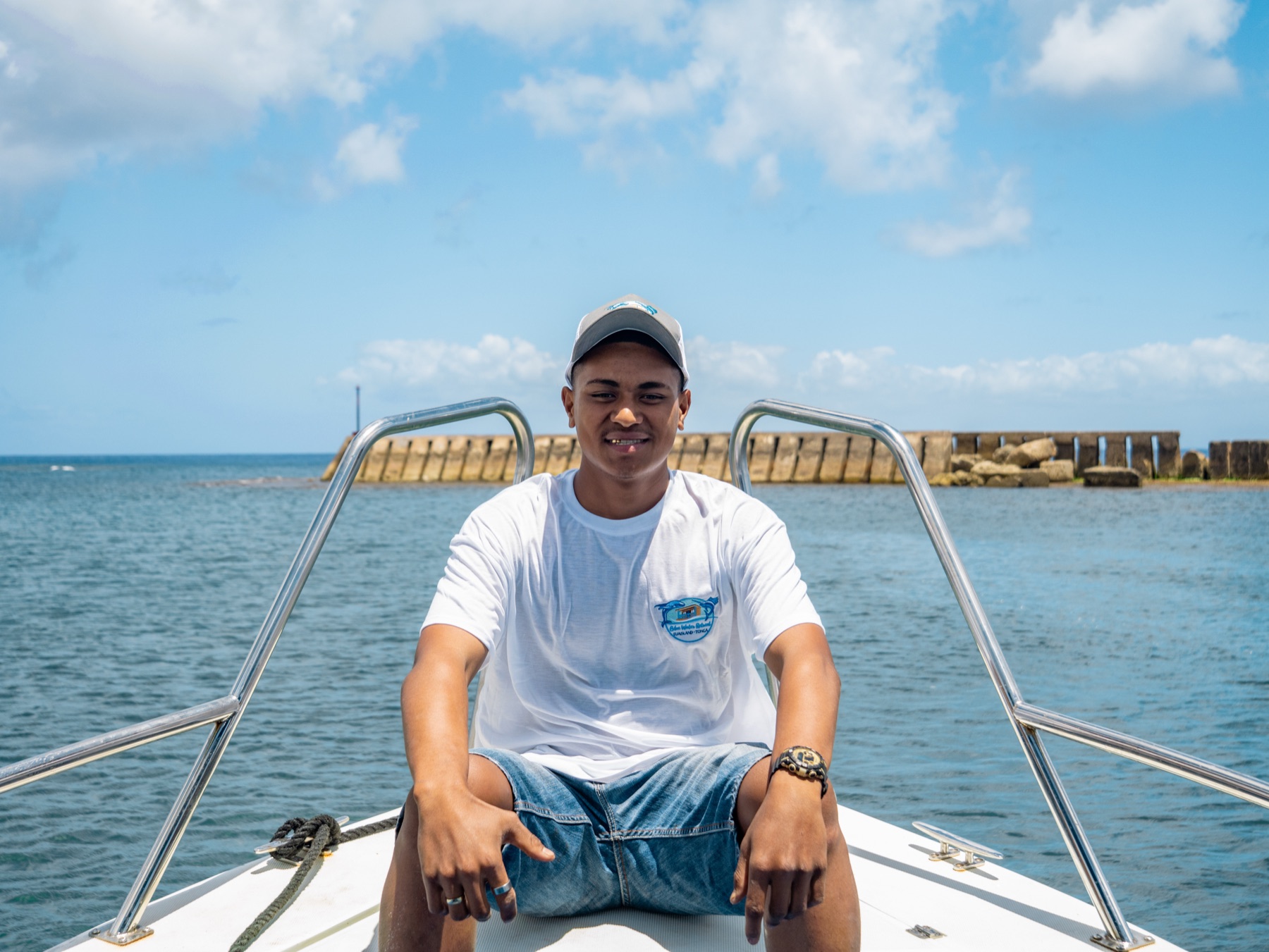
Following in his father Vo's wake, Ne joined the Blue Water Retreat crew for his first whale season in 2026. Already a young licensed skipper, he'll be spending time both at the helm and in the water as a whale guide. Learning alongside some of ʻEua's most experienced crew, Ne is building his own knowledge and experience on the ocean while carrying on a family connection to the sea. The next generation of our crew is coming through.
Vo and Ne · ʻEua
Vo and Ne are a father-and-son duo from ʻEua and part of the Blue Water crew. Two generations of the same island, working together on the same boat.
You’re hearing a humpback whale singer recorded off ʻEua during the 2025 season.