Explore ʻEua · Tonga
An island raised from the Pacific.
Tonga’s oldest island, still being shaped by the sea.
Begin with the land
ʻEua does not sit low on the horizon.
Geologically, ʻEua is Tonga’s oldest island. It rises in a series of terraces towards a high eastern ridge. On one side, steep forest and cliffs meet the open Pacific. On the other, the land falls more gently towards villages, reef and Tufuvai on the western coast, where Blue Water makes its home.
The last crossing
First Tongatapu. Then ʻEua.
Most journeys into Tonga arrive on Tongatapu. From there, a very short domestic flight lifts over the reef, or a passenger ferry lets ʻEua gather slowly on the horizon.
Flights and sailings can change with weather and operations, so leave breathing room between connections and reconfirm the journey before you travel. Blue Water can help you plan the final transfer once your arrival is known.
Getting to ʻEua: flights and ferry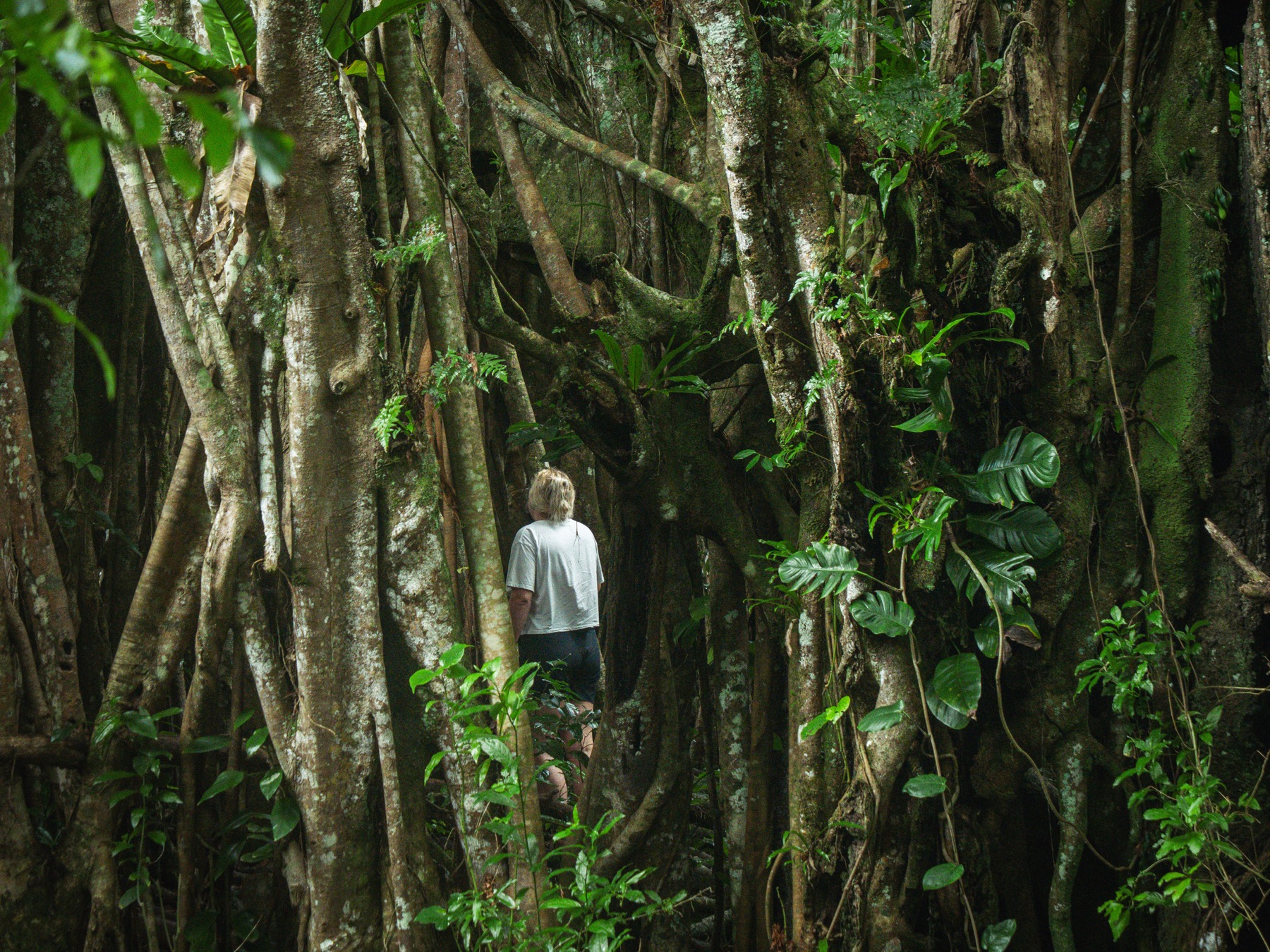
Follow the coastline.
Read the island
The ground keeps changing beneath you.
A single day can move from village roads and forest shade to sea caves, exposed reef and cliffs above a deep Pacific horizon.
1 / 6
An island shaped by the Pacific.
A lived island
Village names hold journeys of their own.
The north is known as ʻEua Motuʻa, or Old ʻEua. In the south, ʻEua Foʻou, or New ʻEua, carries the history of families from Niuafoʻou who rebuilt village life here after the 1946 volcanic eruption forced them from their home island. Several villages kept the names of the places they had left behind.
Kolomaile carries another history: descendants of people relocated from ʻAta in the nineteenth century after slave raiders targeted the island. These are not footnotes to the landscape. They are part of the living connections between families, villages and islands across Tonga.
Reef to rainforest.
Inside the forest
Walk into a different scale.
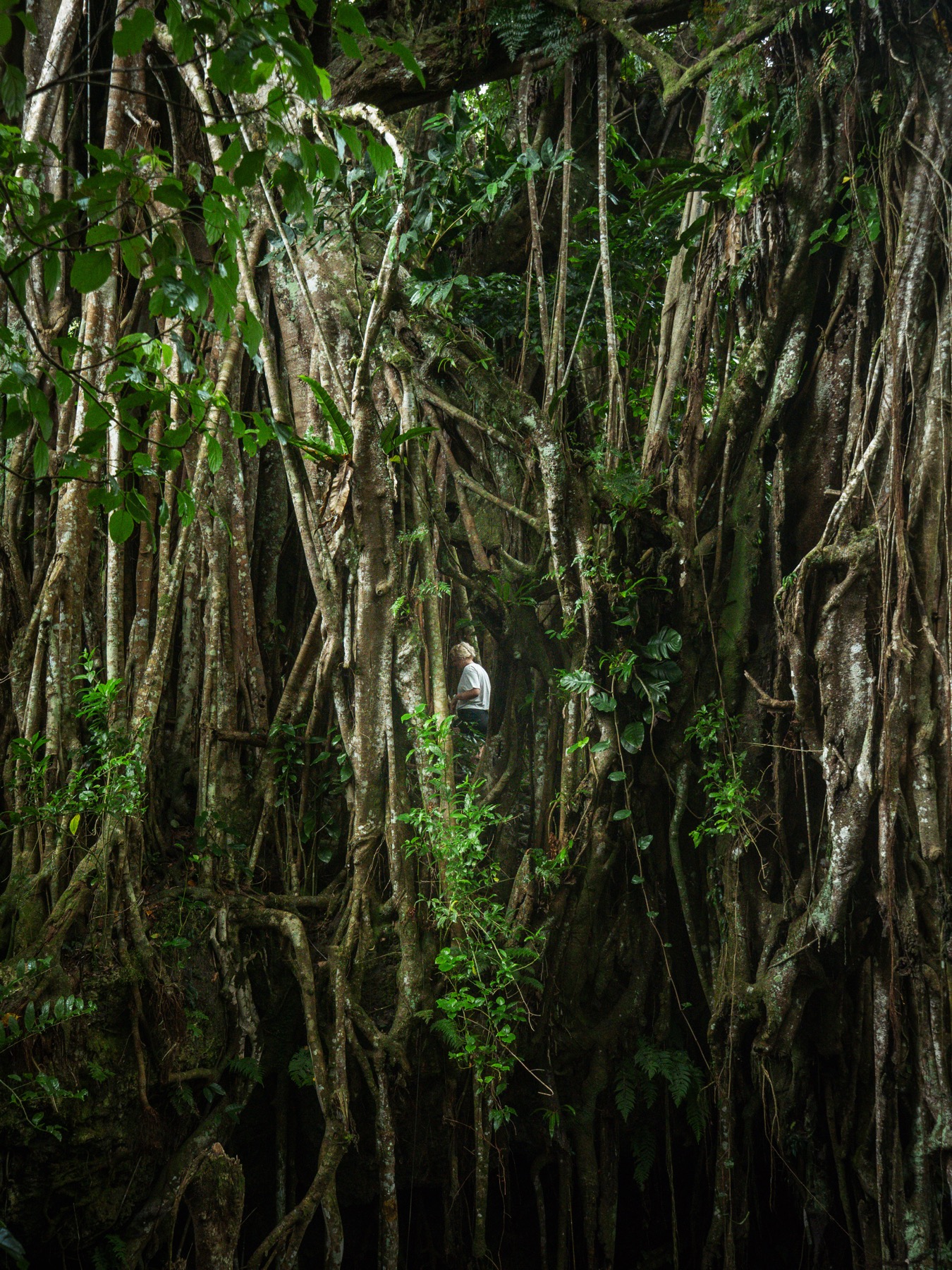
Along ʻEua’s eastern side, the national park protects roughly 450 hectares of tropical forest above the cliffs. Beneath the canopy, ʻOvava roots descend into shadow and the ocean can disappear from view, even though it is only a ridge away.
Listen for the Koki. Its call carries through the forest canopy, holding a story that reaches far beyond ʻEua.
Koki · Red shining-parrot
A living thread between Fiji and Tonga.
Long before European ships arrived, red feathers and live parrots moved along voyaging networks between Fiji and Tonga. Research indicates people introduced the red shining-parrot from Fiji in late prehistory; by the 1770s, a wild population was established on ʻEua.
The feathers were highly valued in Tonga and used to decorate fine pandanus mats and other prestige pieces. Today, the Koki’s call still carries through ʻEua’s forest, a living connection between the island’s ecology and a much older Pacific story.
- Tongan name
- Koki
- Scientific name
- Prosopeia tabuensis tabuensis
- On ʻEua
- Established before European arrival
How the Koki came to ʻEua
A scientific review of Cook-era accounts and archaeological evidence concludes that people carried the species from Fiji into the Tongatapu group in late prehistory. It also proposes that parrots may have been released on ʻEua to establish a local source of prized feathers. The human introduction is well supported; that precise motive remains an interpretation.
Research: Birds New Zealand and Oryx / Cambridge University Press.
How to spend an island day
Choose an environment, not a checklist.
Enter the forest
Walk beneath ʻOvava trees, listen for Koki and follow paths towards lookouts above the eastern coast.
Follow the cliff edge
See how the Pacific has opened caves, rock gardens, pools and the natural bridge of Liʻangahuo ʻa Maui.
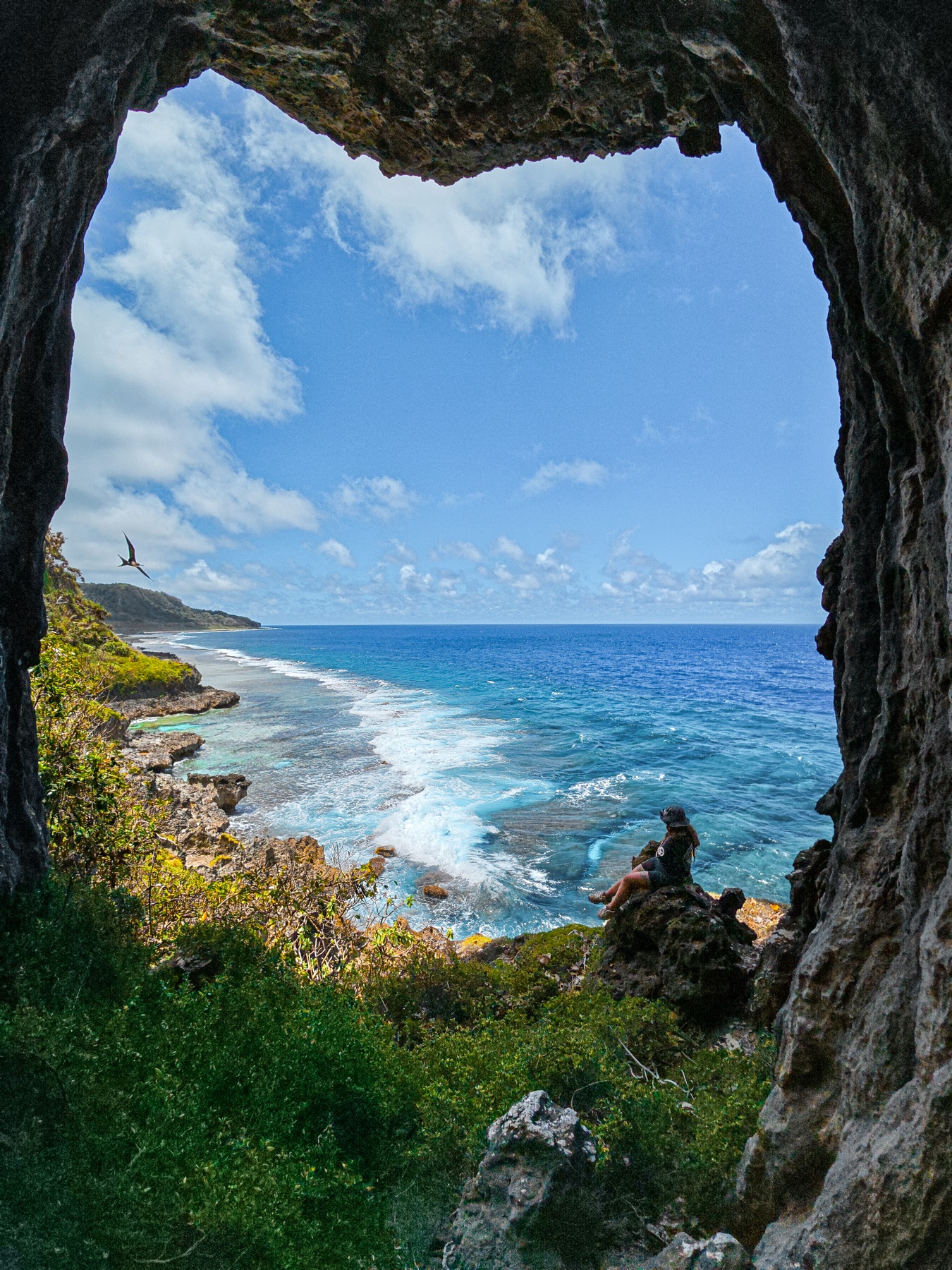
Meet the reef
Swim or snorkel only where tide, swell, access and local advice make the water appropriate that day.
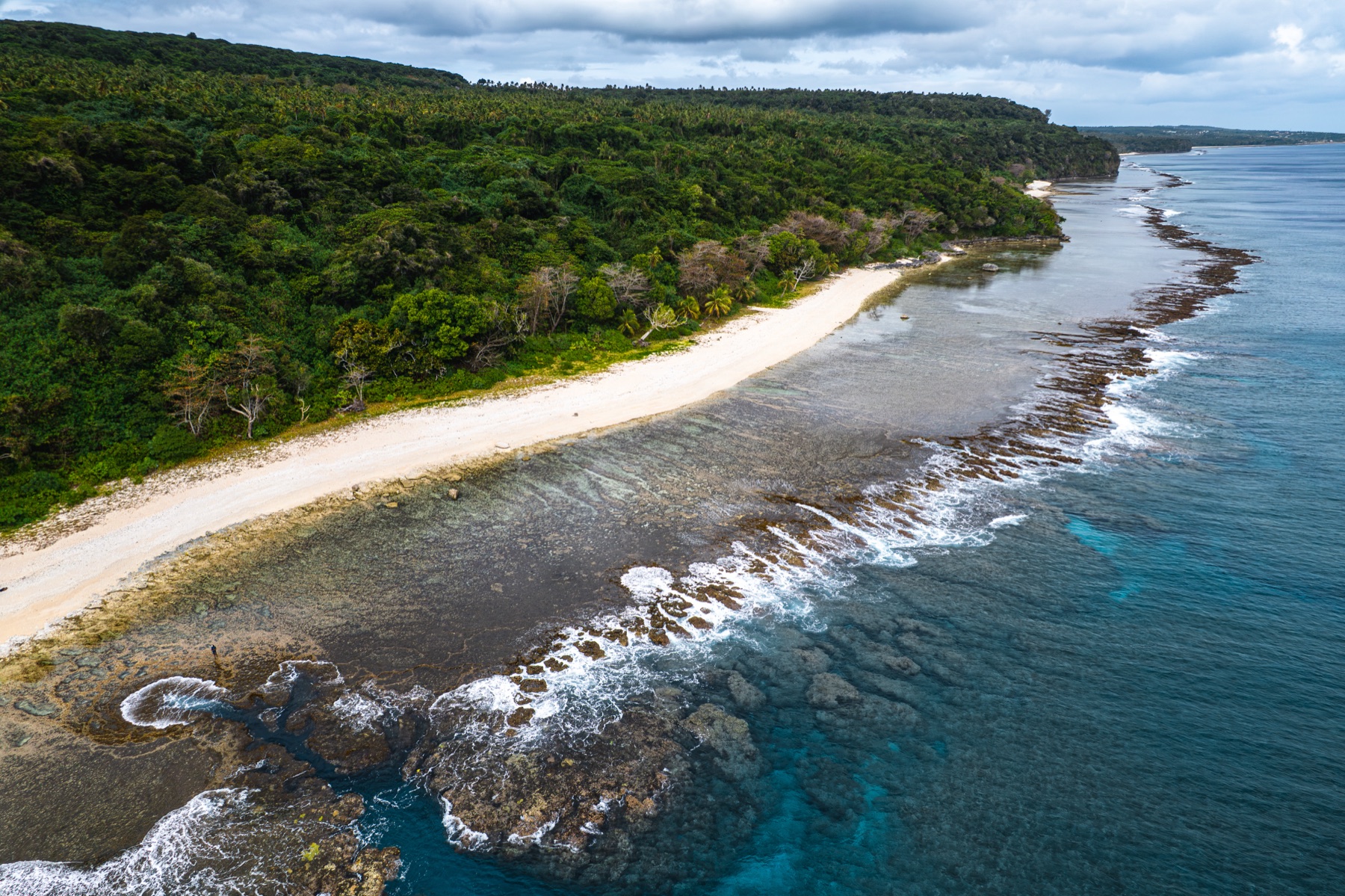
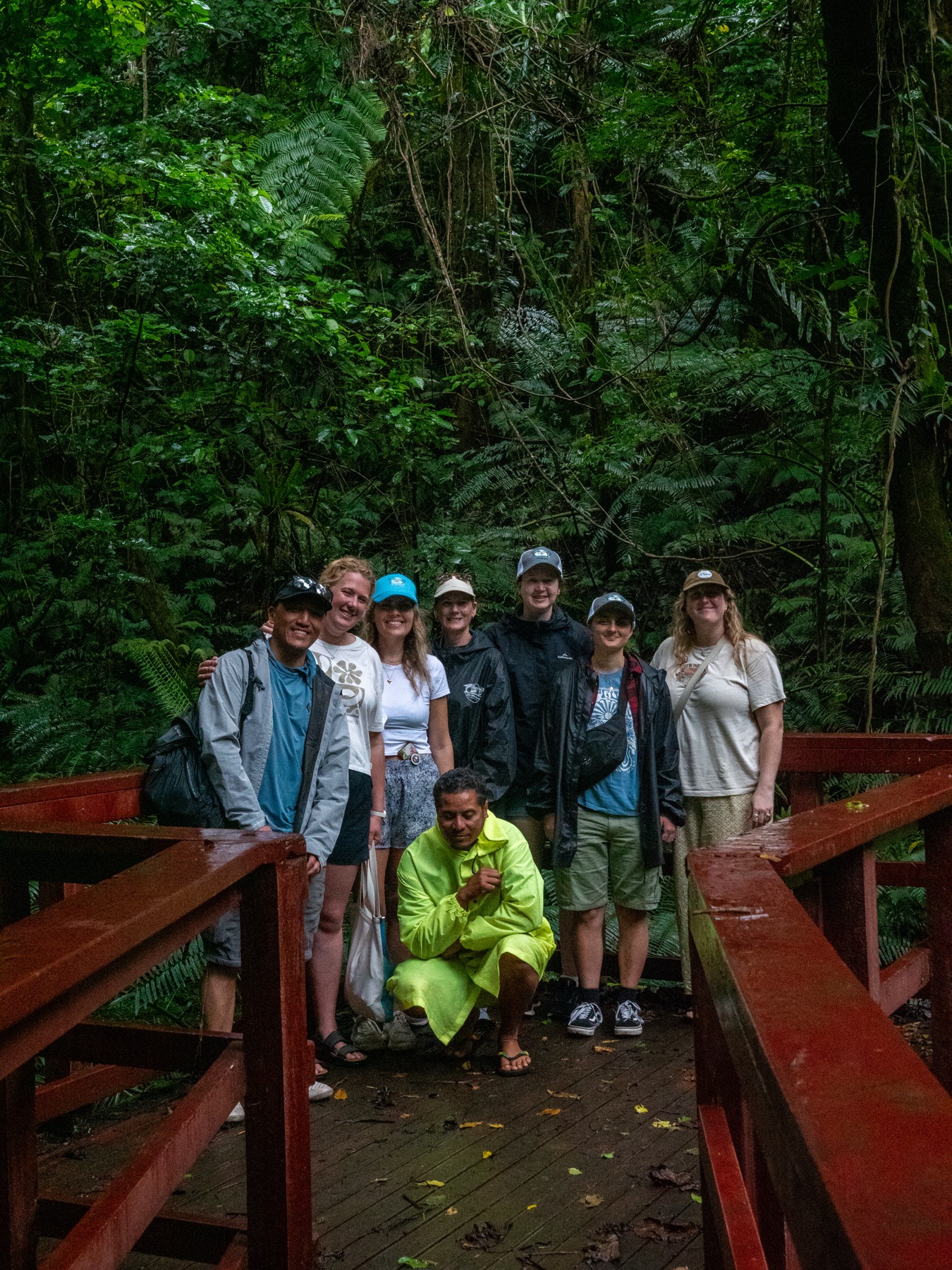
Go with someone who knows
A local guide adds more than directions: land access, names, stories, conditions and the judgement to turn back.
Review note: routes, guides, fitness levels, access, conditions and any off-season water programme must be verified before publication.
Look up.
At the retreat
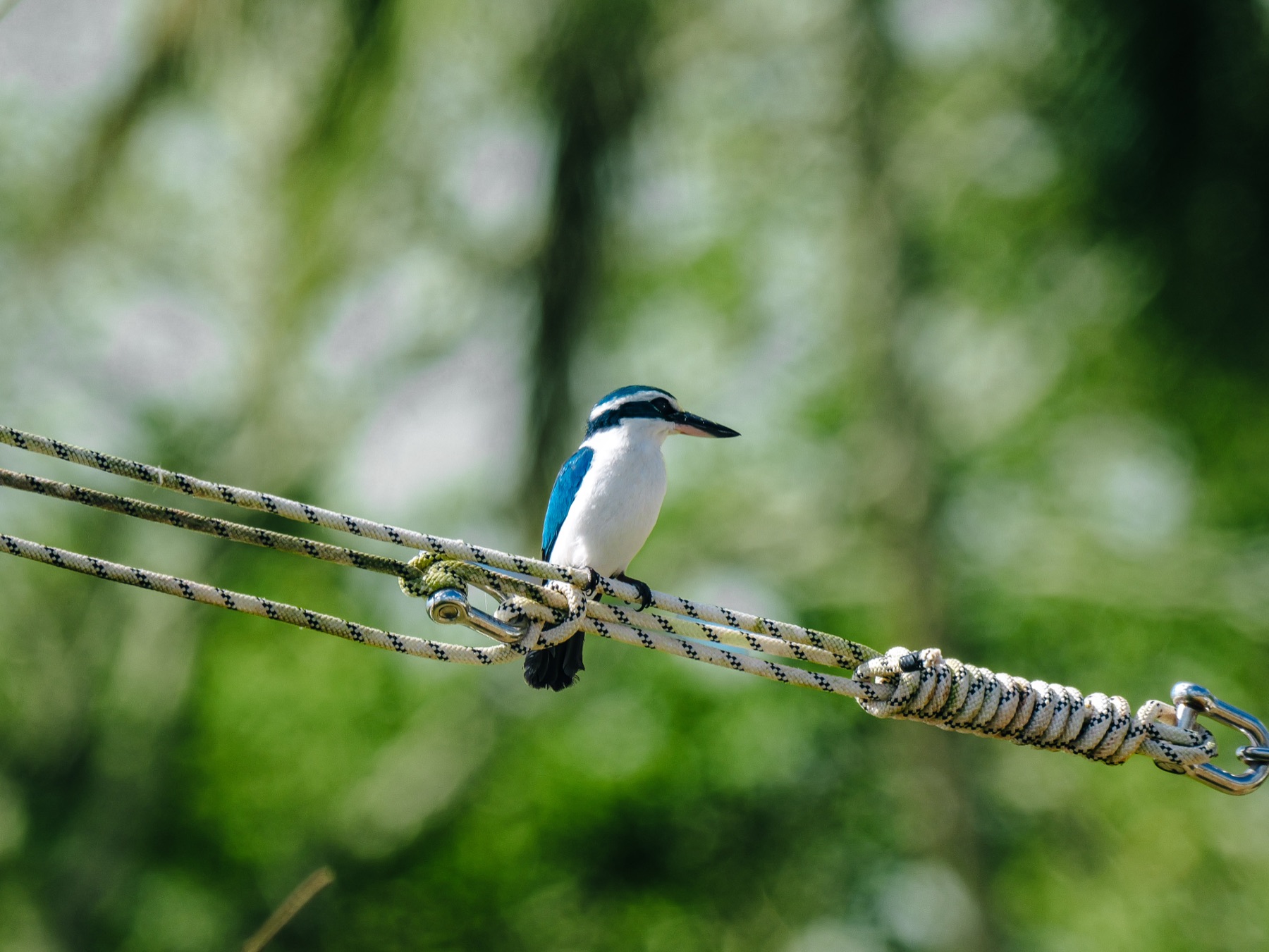
Meet our resident kingfisher.
Our resident kingfisher lives between the trees out front and often perches on the sail above the yoga deck.
Photography by Hannah.
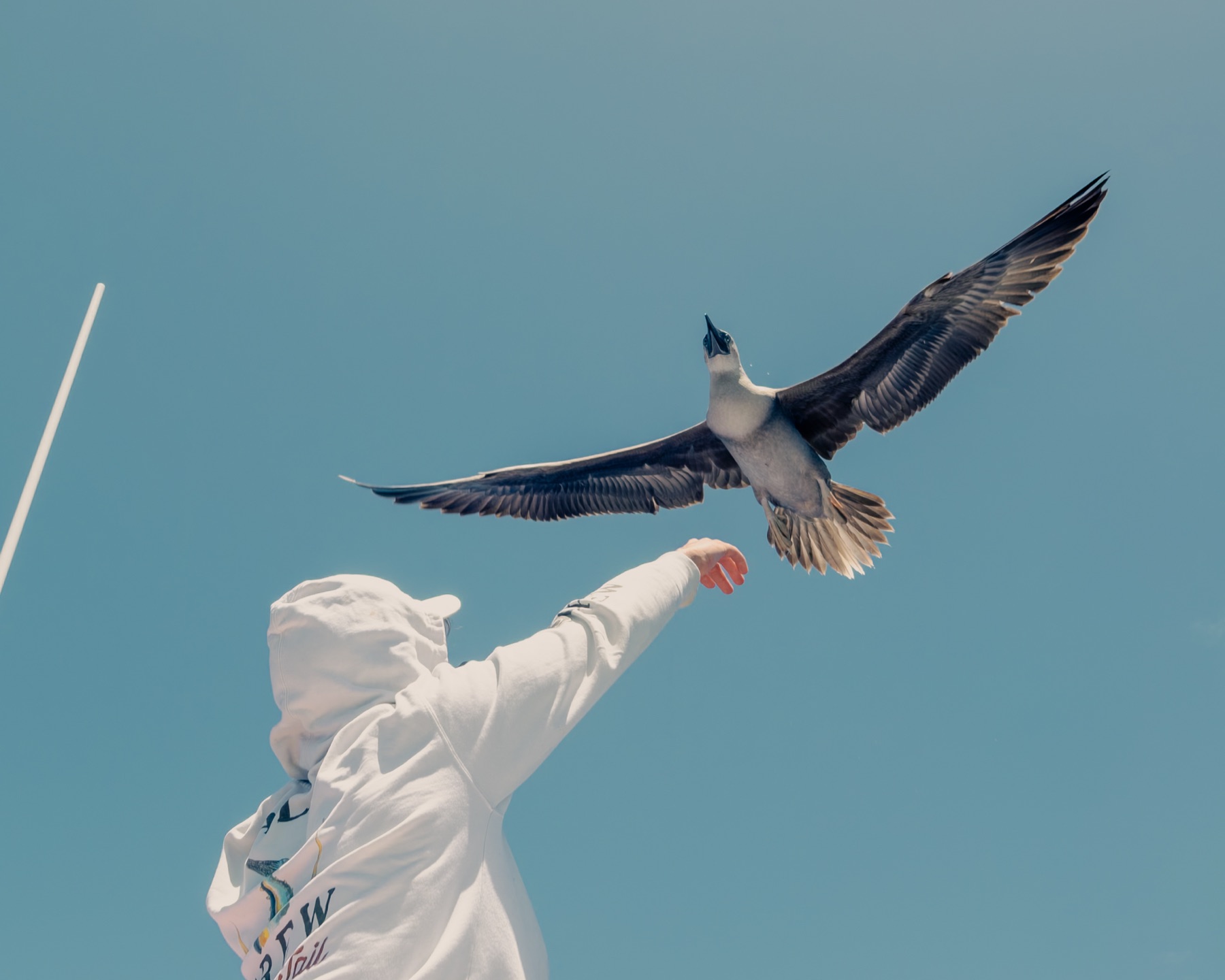
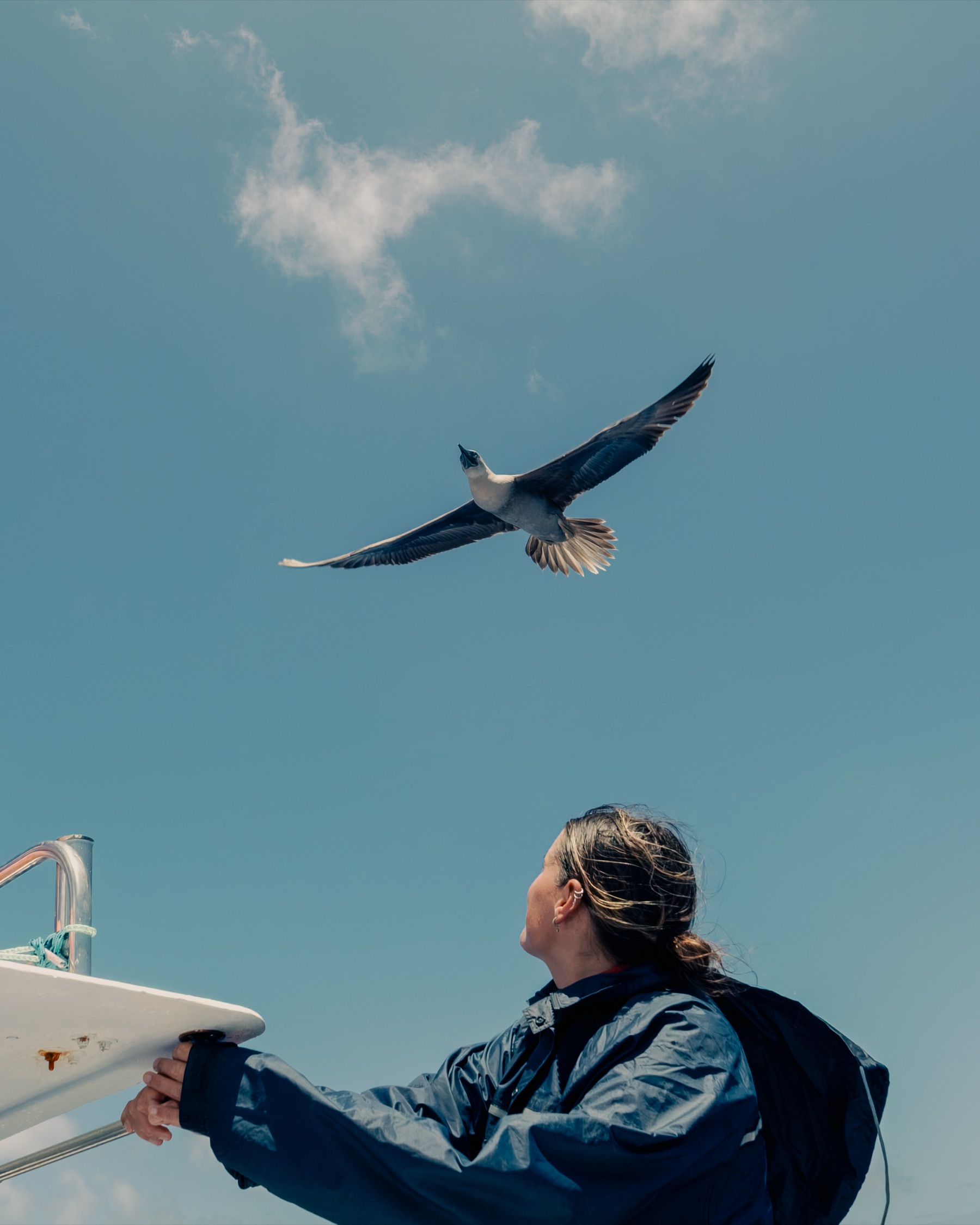
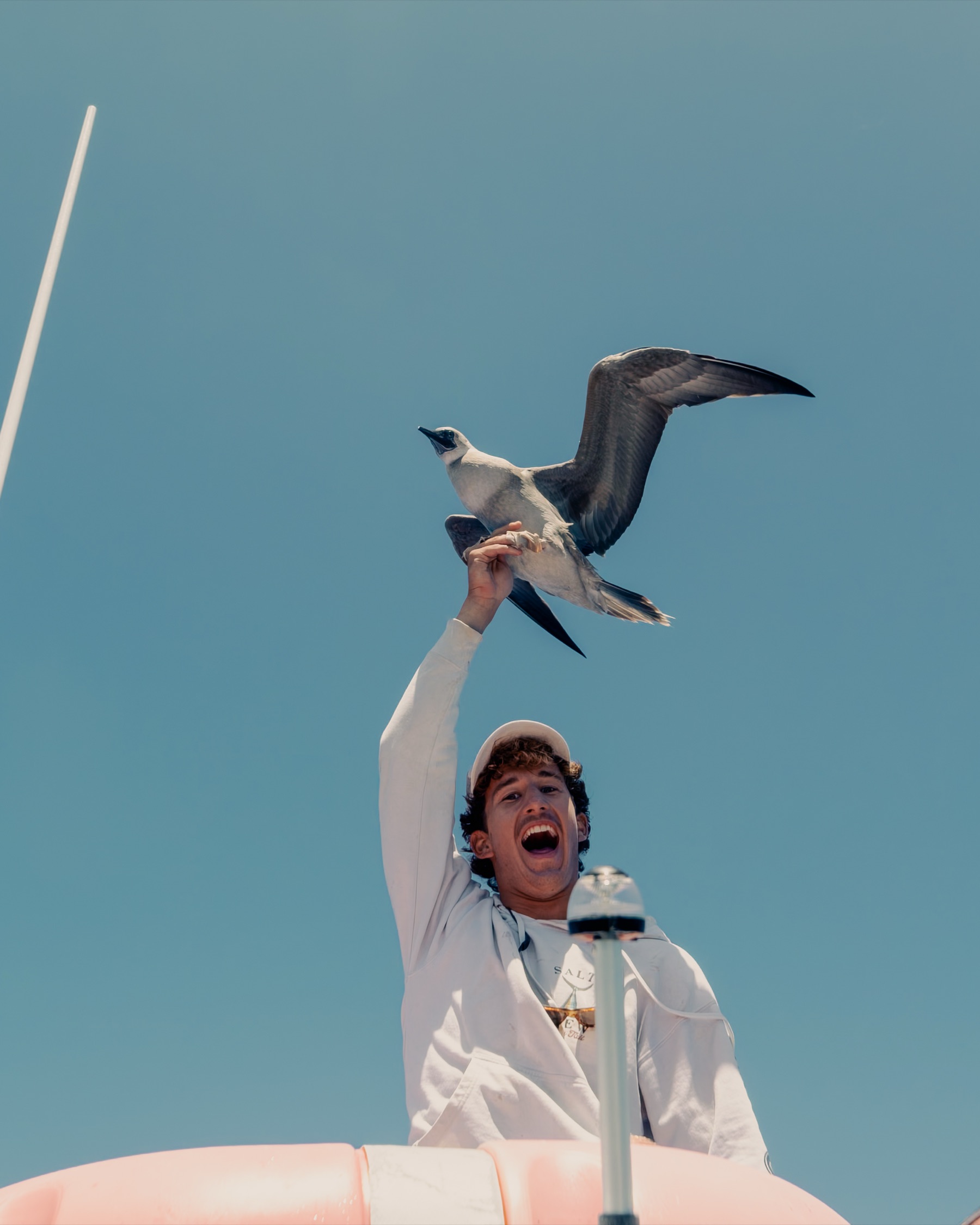
Offshore birdlife
Some pass close.
Boobies work the wind above boats and open water. Wildlife moves on its own terms, and a close moment is never promised.
Look and listen
The island has more than one canopy.
Inland, the sound comes through leaves: Koki, fruit doves and the movement of forest birds overhead. At the cliffs, the sky opens and seabirds work the rising air above the Pacific. The change is as immediate as stepping from shade into wind.
A wild island, alive with birdsong.
The southern horizon
Look past ʻEua to Kalau.
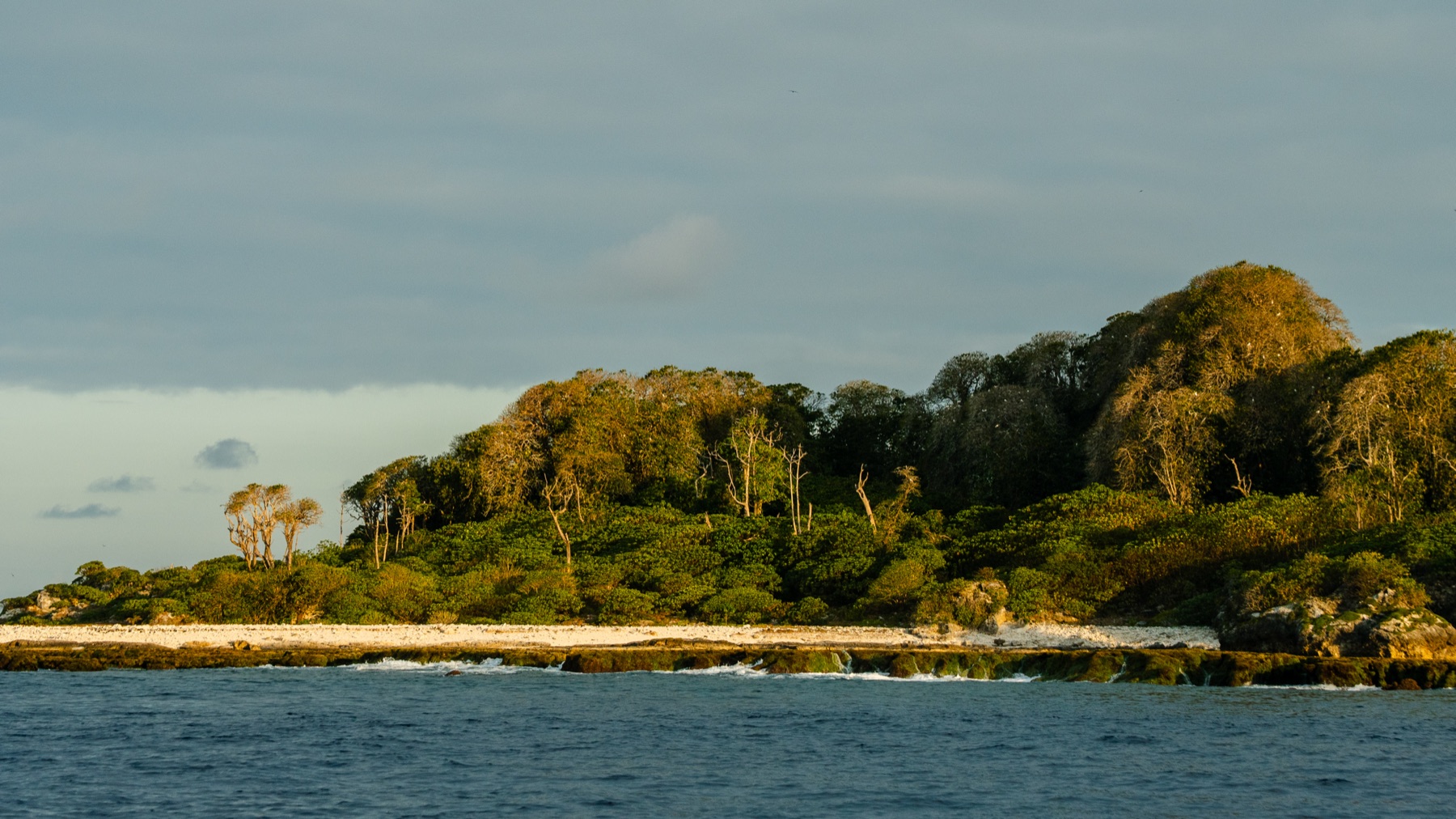
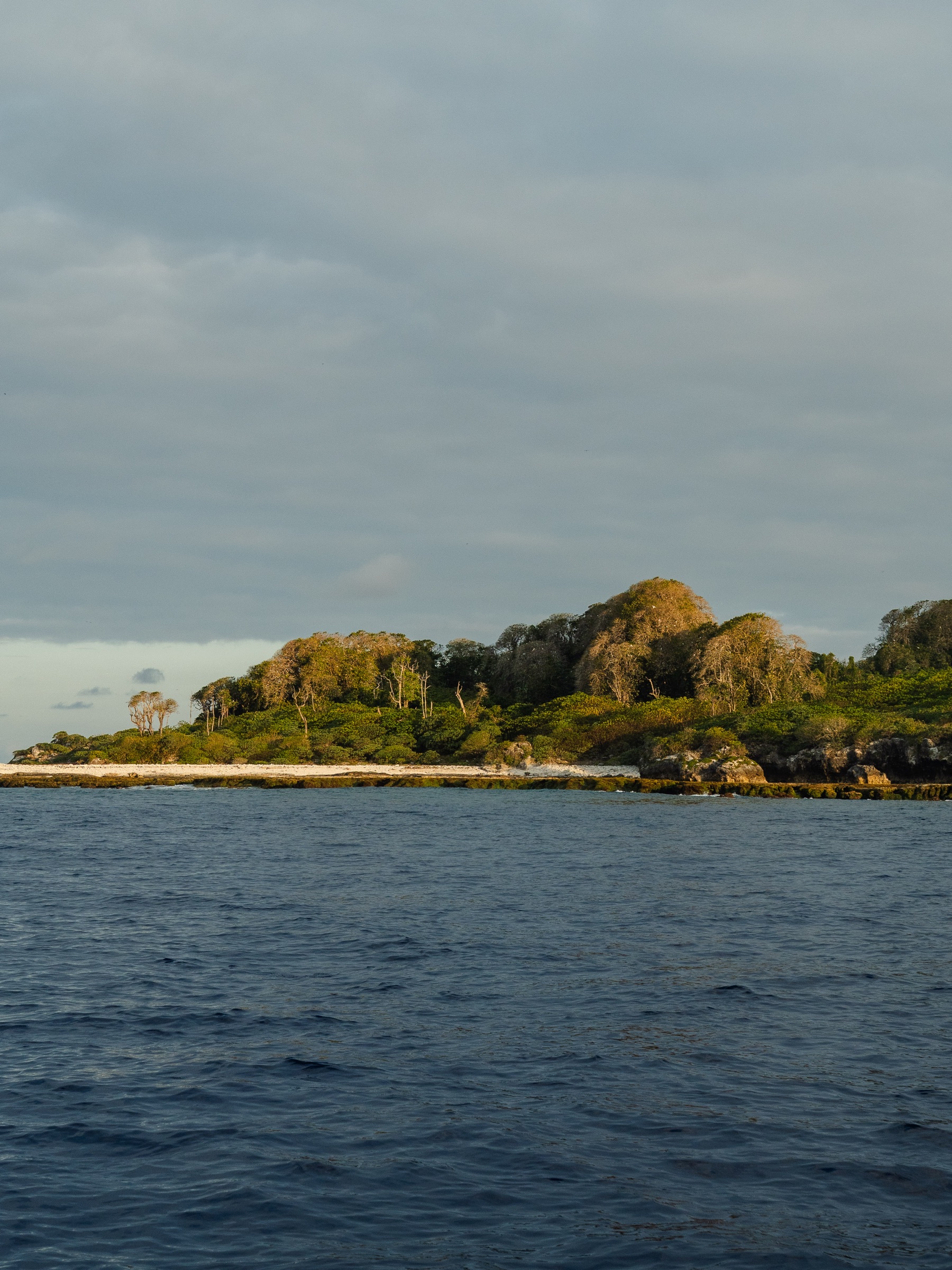
South of ʻEua, another island sits low inside its reef. Kalau is smaller, quieter in profile and surrounded by the same open Pacific that meets ʻEua’s cliffs.
This is the island of Kalau.
Kalau · south of ʻEua
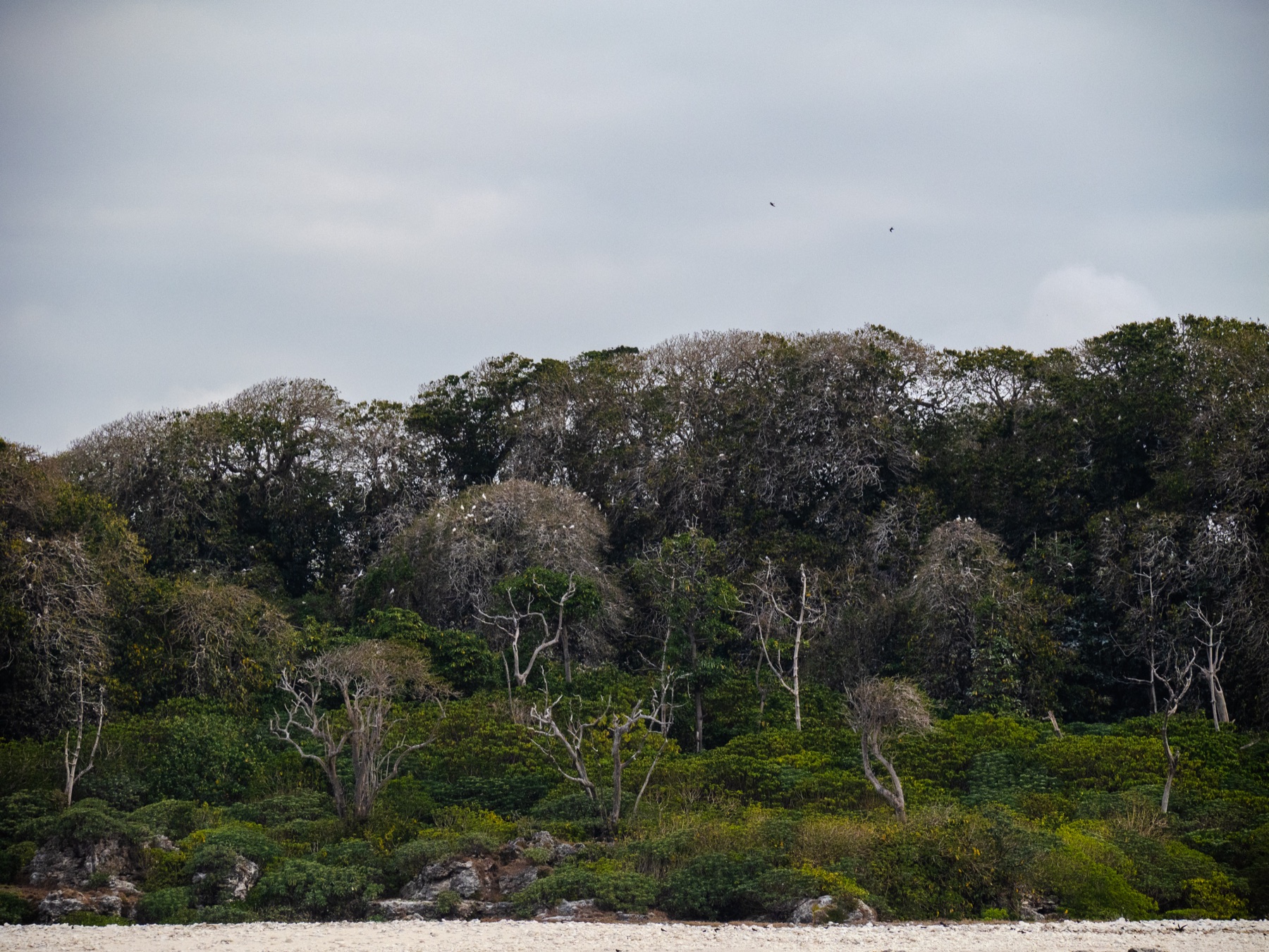
Forest, shore and open Pacific.
From the water, Kalau reads as a low green island edged by pale coral and reef.
Seabirds gather above the canopy while the open Pacific moves along the shoreline. Ask our team about opportunities to experience ʻEua’s landscapes and birdlife.
Why local knowledge changes the day
On ʻEua, knowing where to go is only the beginning. A local guide can read changing access, weather, tide and terrain; explain the names held by the landscape; and know when a track, gate or cultural place asks visitors to stop.
Ask before entering rural tracks or private land, carry water, and let conditions change the plan. The most thoughtful island day leaves room to listen.
Review note: guide relationships, community imagery, cultural context, attribution and consent still require approval before more specific claims are published.
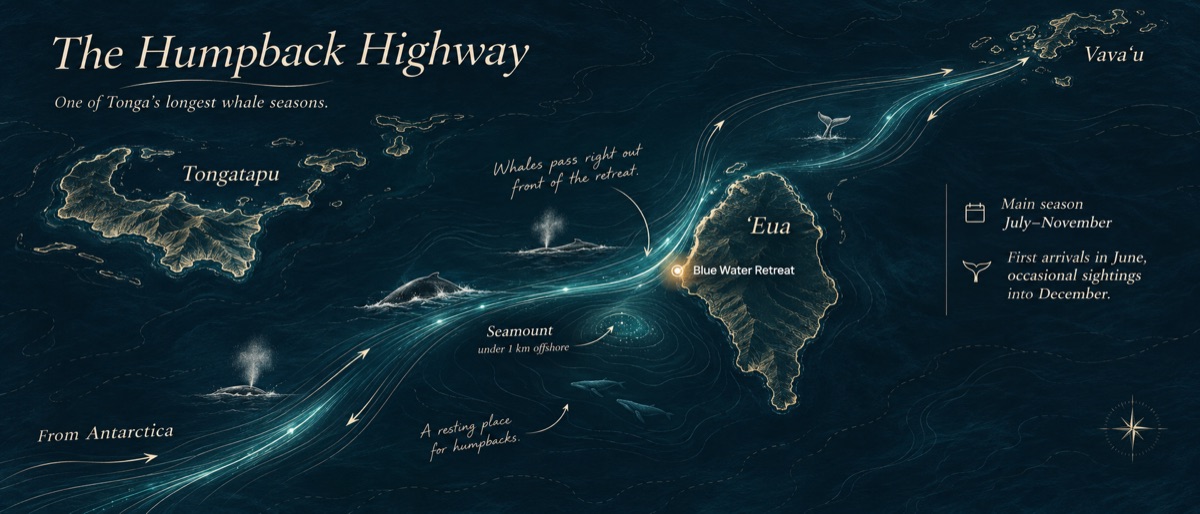
Concept map
A visual direction, not a geographic claim.
The Humpback Highway artwork is concept imagery. A public information map still requires accurate geography, verified migration wording and approval.